
Phase 1, Initiate: the six steps, one by one
By Scrumagic Team Last reviewed 5 min read
In short
The first phase of a Scrumagic run has six steps, from the vision and charter to the release plan. It is the free part of the product. This post walks through each step: what you see, what happens, what you decide and what it produces, with the matching Scrum ideas and the SBOK process names, and no spoilers.
Phase 1 is where every run begins, and it is the free part of Scrumagic: the first six steps, up to and including the release plan. It is also the phase that most people underestimate. Nothing is built, but a good deal is decided, and the rest of the run keeps referring back to it.
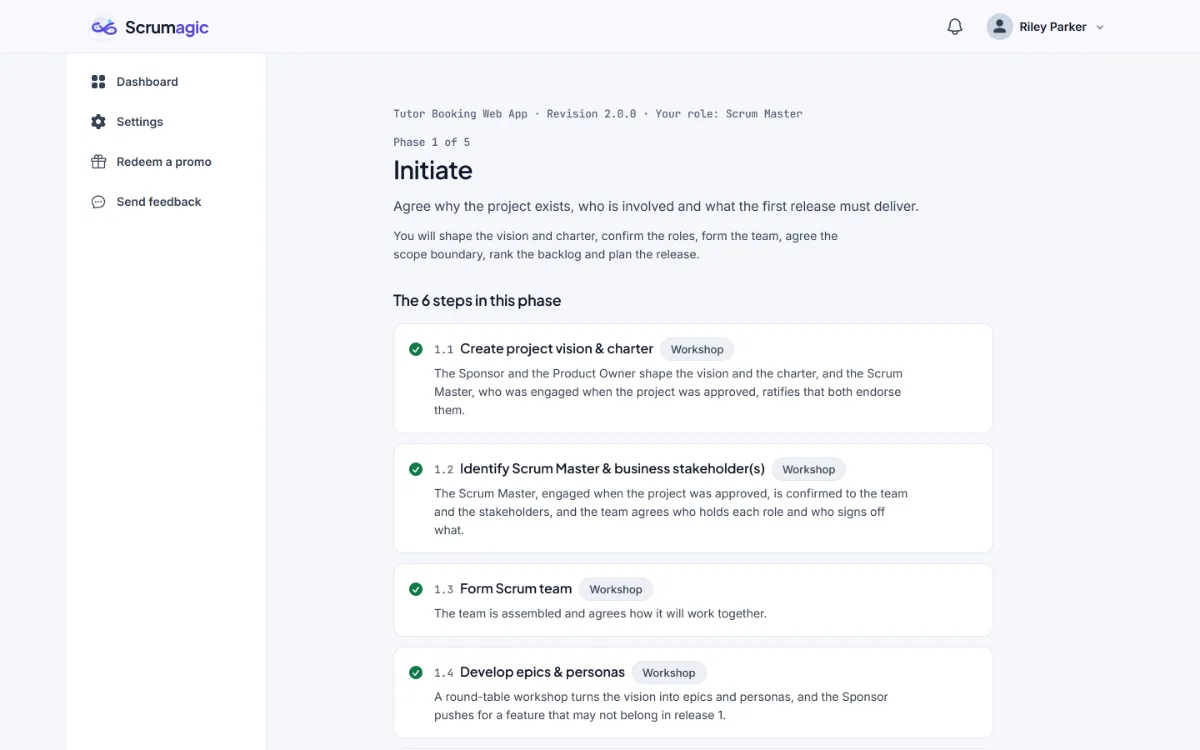
Each phase opens with an overview like this one. The steps that follow all work the same way: you read the inputs, a ceremony plays out among the team, a decision opens at the end, and the step produces its outputs. Your first simulation, step by step explains that pattern, and this post goes through the six steps one at a time. Where the SBOK® Guide, Fifth Edition, has a matching process, we name it, and the Scrum Guide and the SBOK side by side explains how the two documents relate.
Step 1.1: create the project vision and charter
What you see. A business case, a market study, the company's vision and the funding limits.
What happens. The sponsor and the Product Owner shape a vision and a charter in a workshop. The Scrum Master, who was engaged when the project was approved, is in the room.
What you decide. Whether both the Product Owner and the sponsor endorse the vision and the charter. It is a ratification, and you are agreeing that the people with authority are aligned.
What it produces. A vision statement and a project charter.
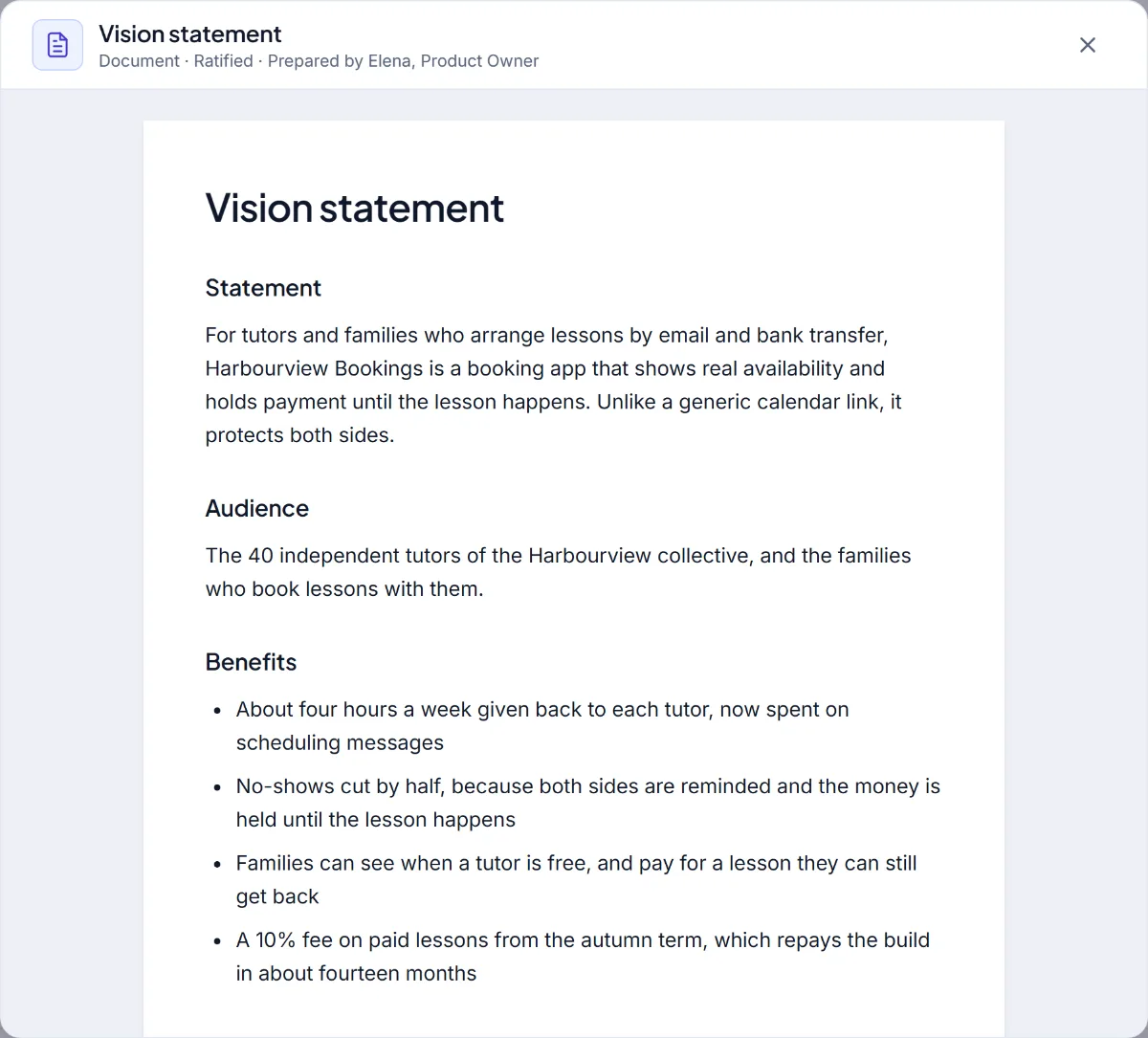
This matches the SBOK's Create Project Vision process. Our post on project vision and the Product Goal covers the idea.
Step 1.2: identify the Scrum Master and the business stakeholders
What happens. The Scrum Master is confirmed to the team and the stakeholders, and the team agrees who holds each role and who signs off what.
What you decide. Whether you confirm the roles and the sign-off matrix, or ask for changes.
What it produces. A role matrix and a governance protocol. These are the reference for who may overrule whom, and they are consulted later when a request arrives from the wrong direction. The matching idea is in stakeholders and choosing a Scrum Master.
Step 1.3: form the Scrum team
What happens. The team is assembled and agrees how it will work together. You read profiles of the skills and working styles of the people available.
What you decide. Whether you ratify the roster and the norms or revise the norms.
What it produces. A team roster, a collaboration plan, a team-building plan and a backup roster. See forming a Scrum team for why backups and working agreements matter.
Step 1.4: develop epics and personas
What you see. The charter, personas of the people the product is for and a list of candidate epics.
What happens. A round-table workshop turns the vision into epics and personas, and the sponsor pushes for a feature that may not belong in release 1.
What you decide. Where to draw the line between release 1 and the deferred work. In some roles the decision is the Product Owner's, and the others watch.
What it produces. The epics, the personas, a scope-boundary log and a risk register. This is the scope record that later steps refer to. See epics and personas.
Step 1.5: create the prioritized backlog and the Definition of Done
What you see. The epics, the personas, the scope-boundary log and a list of candidate backlog items.
What happens. The team ranks the backlog by value and risk and agrees the Definition of Done. Ordering mistakes are challenged in character.
What you decide. Whether you approve the ranked backlog and the Definition of Done, or send them back for rework.
What it produces. The prioritised backlog and the Definition of Done. These are the SBOK's Create Prioritized Product Backlog outputs, and our posts on ordering the Product Backlog and the Definition of Done explain them.
Step 1.6: conduct release planning
What happens. The team chooses the sprint length and locks the release plan. The choice sets how much the team can take on in every sprint.
What you decide. The sprint length, from one to four weeks. The plan is locked once you confirm.
What it produces. A release schedule, a sprint roadmap and a deferred backlog.
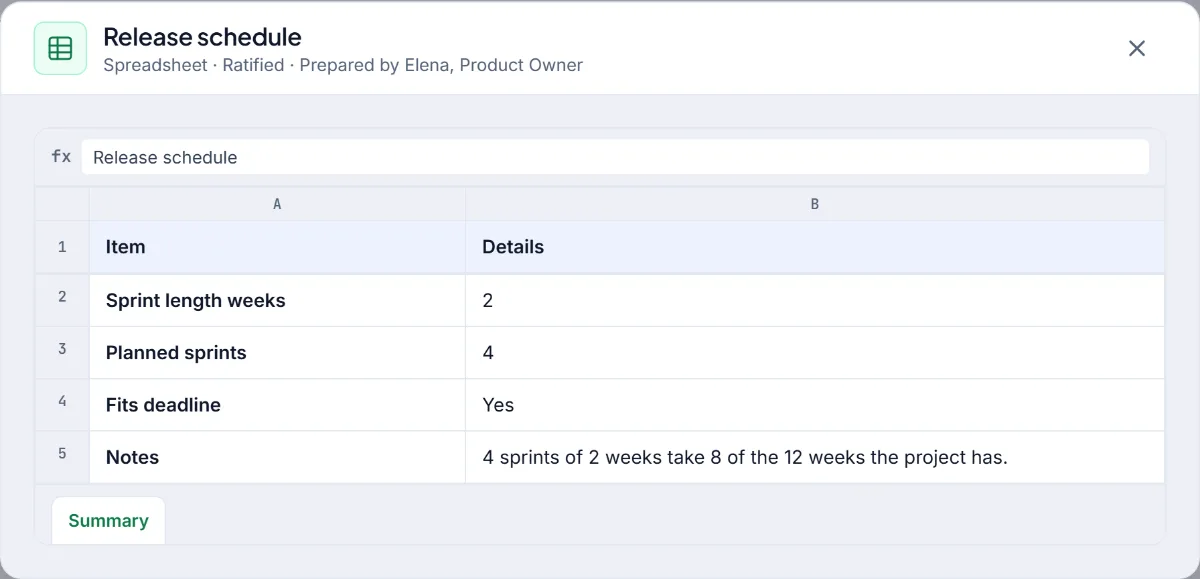
Release planning in Scrum covers the thinking behind it.
How the roles differ here
The six steps are the same whichever role you play, but your part in them is not. The Scrum Master is in the room for all six and facilitates each one. The Product Owner shapes the vision and the charter with the sponsor and owns the scope decision in step 1.4. A Developer joins when the team is formed, so steps 1.1 and 1.2 happen before you arrive, and you take part from step 1.3 on. If you play the phase twice in different roles, you will see the same documents come out of conversations that feel quite different. Choosing your role says more about each.
What carries forward
Phase 1 is full of decisions that look administrative and are not. The sign-off matrix, the scope boundary, the Definition of Done and the sprint length all return later, in later steps and in the scorecard. The time you spend here is part of why later phases go well or badly.
You can play the whole of Phase 1 on the Free plan. Later phases need Pro, and the pricing page has the details. Everything in the simulation is fictional.
SBOK® is a registered trademark of its owner. Scrumagic is independent and is not affiliated with the owners of SBOK®.
Nothing opened? This computer may have no email program set up. Write it in Gmail or use the copy button and paste the link into your email.