
Who Scrumagic is for, and who it is not for
By Scrumagic Team Last reviewed 5 min read
In short
Scrumagic is a Scrum simulator: you play one role on a six-person team for a whole fictional project, and AI teammates play the rest. It suits people who want to practise Scrum decisions before they make them for real. It is not a course, a certificate or a substitute for working with real people, and this post is plain about where its limits are.
Learning Scrum from a book gives you the vocabulary. Learning it from a team gives you the practice, if you can find a team willing to let a beginner make mistakes. Scrumagic sits in the gap. This post says who it helps, and, because it is more useful, who it does not.
What it is
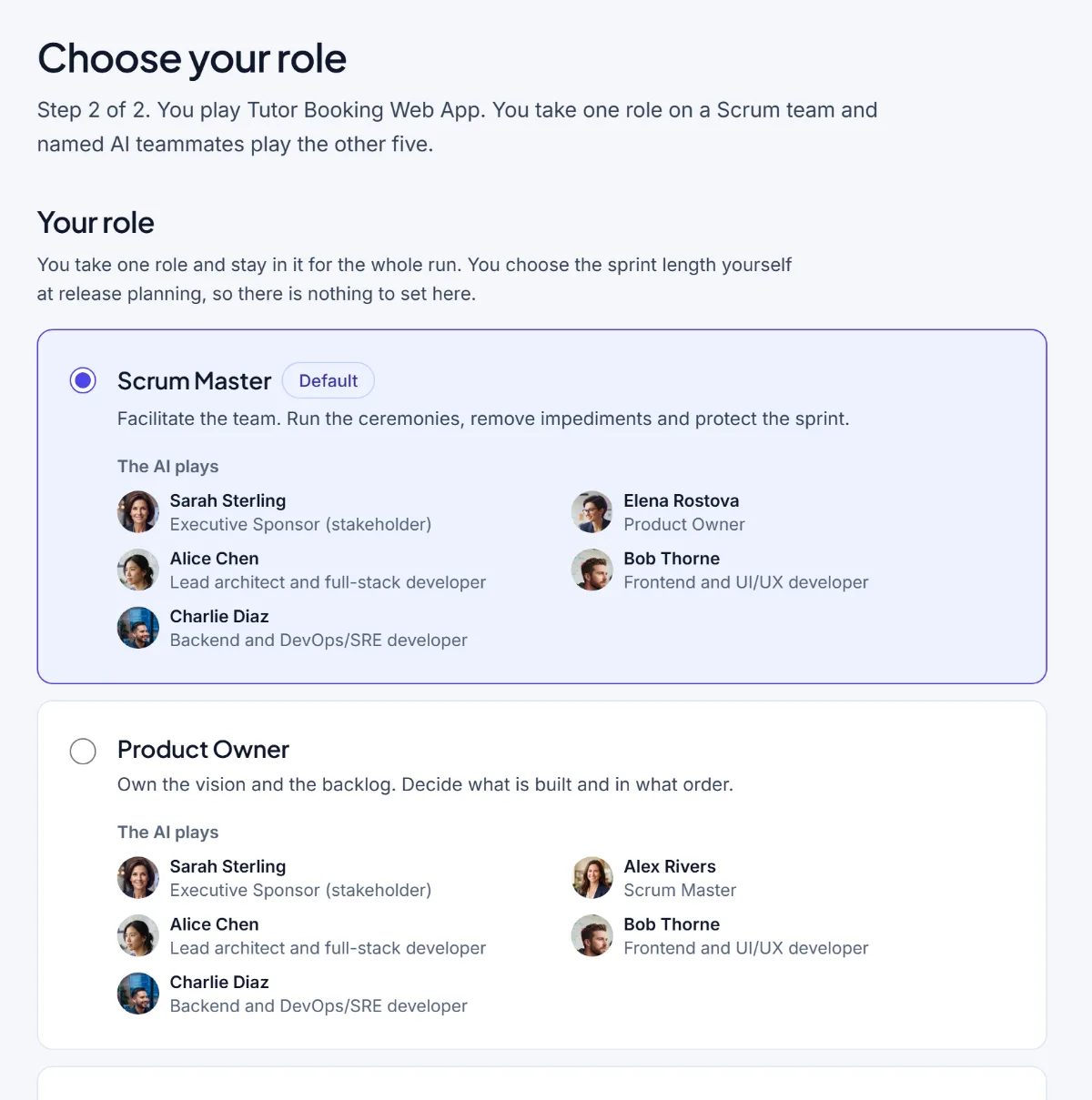
Scrumagic is a Scrum simulator. You take one role, Scrum Master, Product Owner or Developer, on a six-person team, and named AI teammates play the other five. Together you run a complete fictional project: the first request from a sponsor, a number of sprints and a release. At each step, a ceremony plays out among the team, a decision opens and you make it, and the simulation carries the consequences forward. What Scrumagic is and how a simulation runs describes it in full.
Who gets the most from it
People learning Scrum who have never been on a team. Students, career changers and anyone preparing for a first Scrum role. You meet situations that a book describes in a sentence, such as a sponsor who wants more or a developer who says a task is nearly done, and you have to respond.
New Scrum Masters. Facilitation is a skill that you only improve by doing. The Scrum Master role puts you in every ceremony with teammates who push back in character, and a mistake costs nothing. A run as the Scrum Master describes it.
Product Owners, and people who work like one. Ordering a backlog and saying no to a stakeholder are easy to explain and hard to do. A run as the Product Owner shows the decisions you will meet.
Developers who have been told to "do Scrum". Estimating and committing look arbitrary until you have to defend a number. A run as a Developer covers what you do and why the ceremonies exist.
Trainers and mentors. If you teach Scrum, the scenarios are a source of realistic situations that your learners can run on their own and then talk through with you. Scrumagic does not have class management, group runs or team accounts, so it supports a trainer's teaching and does not replace it.
Who gets less from it
It helps to be honest about this.
- If you want a certificate. Scrumagic is not a course, and its scorecard is a scorecard, not a certificate or a grade. It does not prepare you for any particular exam, and we make no claim about results.
- If you want to learn from other people. One human takes part in each run, and the other roles are played by AI. It cannot replace the experience of a real team with real disagreements.
- If you want to be in and out in an evening. Steps open one at a time, a day apart, to give you time to think between decisions. A full run therefore takes days, though the active work is a few hours.
- If you already facilitate Scrum well every week. The earlier scenarios will teach you little. The harder ones, such as Legacy Migration and Hospital Data Platform, are designed for experienced learners.
What a first run is like
A first run on Tutor Booking starts with the first phase, six steps from the business case to the release plan. You read a few documents, watch a workshop play out among the team and make a handful of decisions. Each step is a short sitting, and because the next one opens the following day, there is time to think about what you decided. If you want to understand the format before you start, Phase 1, Initiate, step by step walks through it, and the purpose of the Sprint Retrospective and the Increment explain two ideas you will meet along the way.
How it is built, and what that means
The AI teammates stay in role, remember earlier steps and are attributed by name, and the simulation, not the AI, advances the state and does the scoring. How the AI teammates work explains this, and the Scrum Team describes the roles they play. The scenarios are fictional, and none of the companies, people or figures is real. The process follows the SBOK® Guide, Fifth Edition, as a third party's guide with no affiliation, and the decisions are framed by the Scrum Guide.
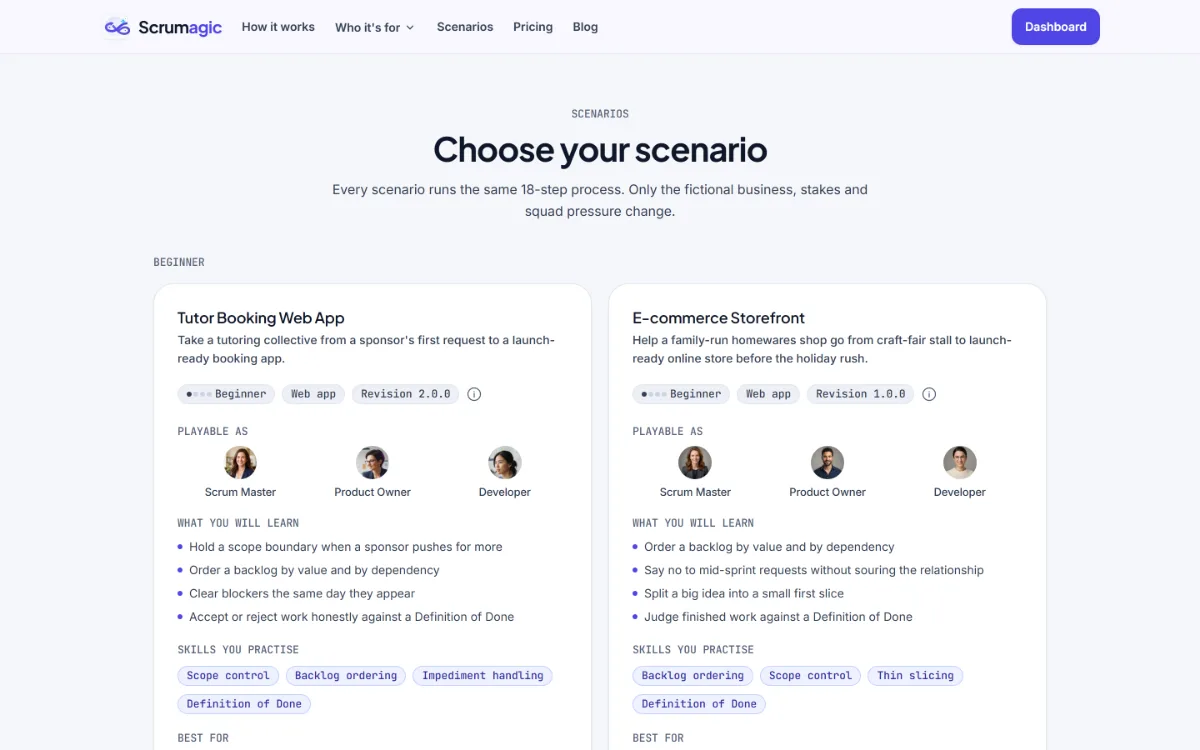
There are eight scenarios, from beginner to expert, and the scenarios at a glance describes them. The first phase of every run is free. The later phases need Pro, and the pricing page has the details.
A word on the scenarios
There are eight, graded from beginner to expert, and each puts a different pressure on the same lifecycle: a sponsor with a new idea every week, an investor demo, a board with many opinions, a regulator, a partner who builds on your interface, messy data and a migration nobody can see. They are written so that you can play any of them in any role, and the recommended order is on each scenario card. If you are unsure where to begin, begin with the first.
How to decide
If the first two paragraphs of this post described you, start with a Scrum Master run on Tutor Booking. The first six steps are free and open one a day, so you will know within a week whether the format suits you. The free Scrum simulator post says what they cover.
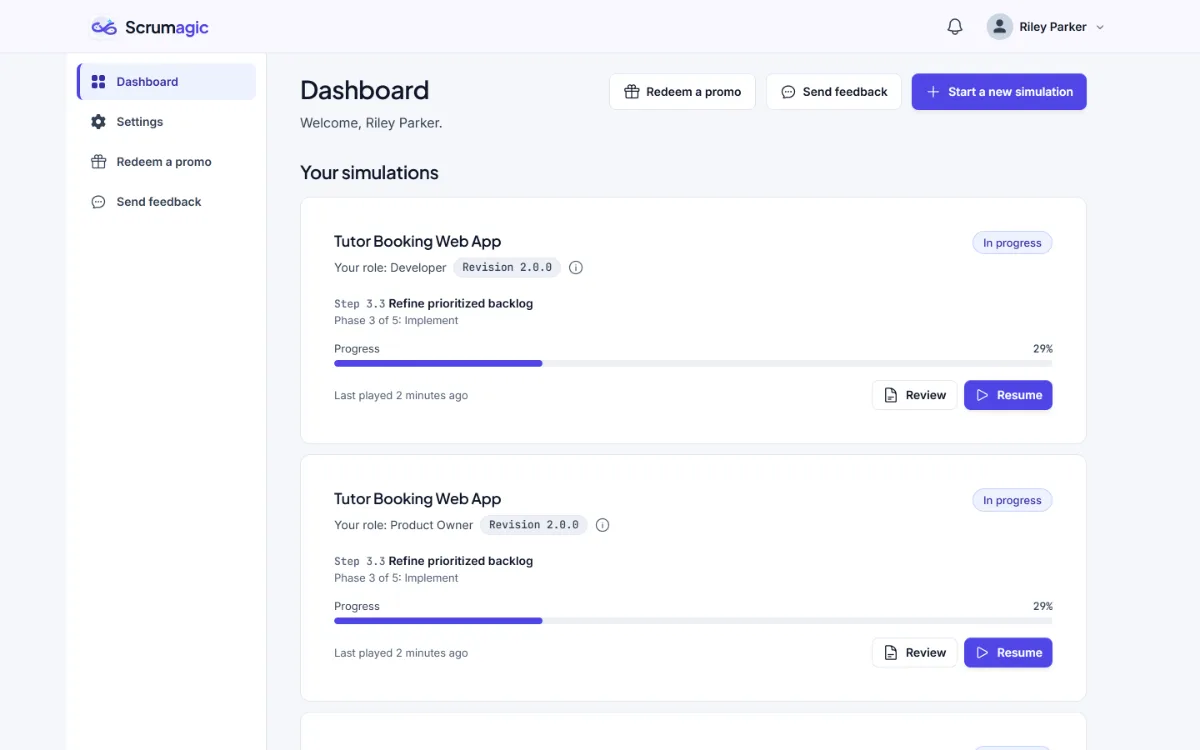
You can then pick up the run on the dashboard whenever the next step opens.
SBOK® is a registered trademark of its owner. Scrumagic is independent and is not affiliated with the owners of SBOK®.
Nothing opened? This computer may have no email program set up. Write it in Gmail or use the copy button and paste the link into your email.