
Phase 5, Release: the two steps, one by one
By Scrumagic Team Last reviewed 5 min read
In short
The last phase of a Scrumagic run ships the product and closes the project. It has two steps: the cutover, where the Product Owner authorises the release and the sponsor accepts the deliverables, and the retrospective on the whole release. A scorecard follows. This post walks through both steps, with no spoilers.
The end of a project is easy to treat as a formality. The work is accepted, the date arrives and the team moves on. In Scrumagic it has two steps and a result, and they test whether you can finish a project as carefully as you started one.
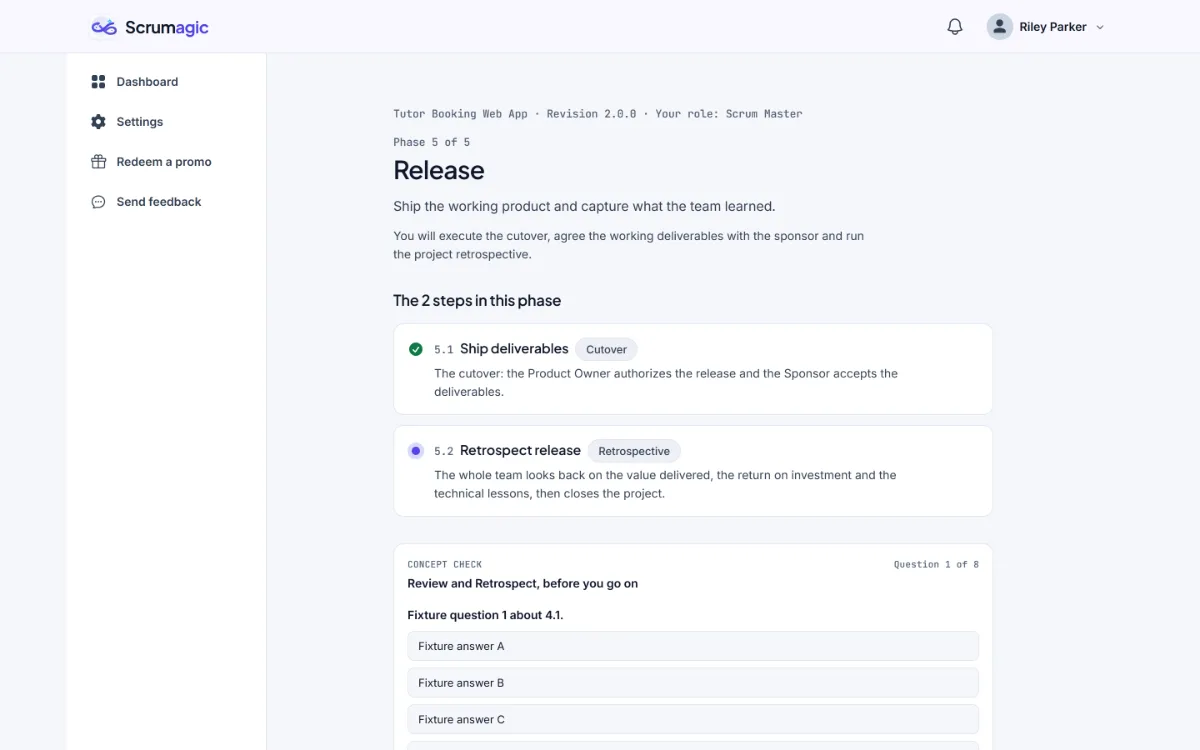
Unlike the earlier phases, Phase 5 happens once per run, after the last sprint. The matching idea in Scrum is the release itself, which the Scrum Guide treats as the Product Owner's decision, separate from the Sprint Review. Shipping the release explains that separation in general. Where the SBOK® Guide, Fifth Edition, has a matching process, we name it, and the Scrum Guide and the SBOK side by side shows how the two documents relate.
Step 5.1: ship the deliverables
What you see. The acceptance register, the project charter and the Definition of Done.
What happens. This is the cutover: the Product Owner authorises the release and the sponsor accepts the deliverables.
What you decide. Whether you execute the cutover. It cannot be undone, so the decision is a real one, and the choice is recorded.
What it produces. A working deliverables agreement, a deployment plan, release notes and a release record.
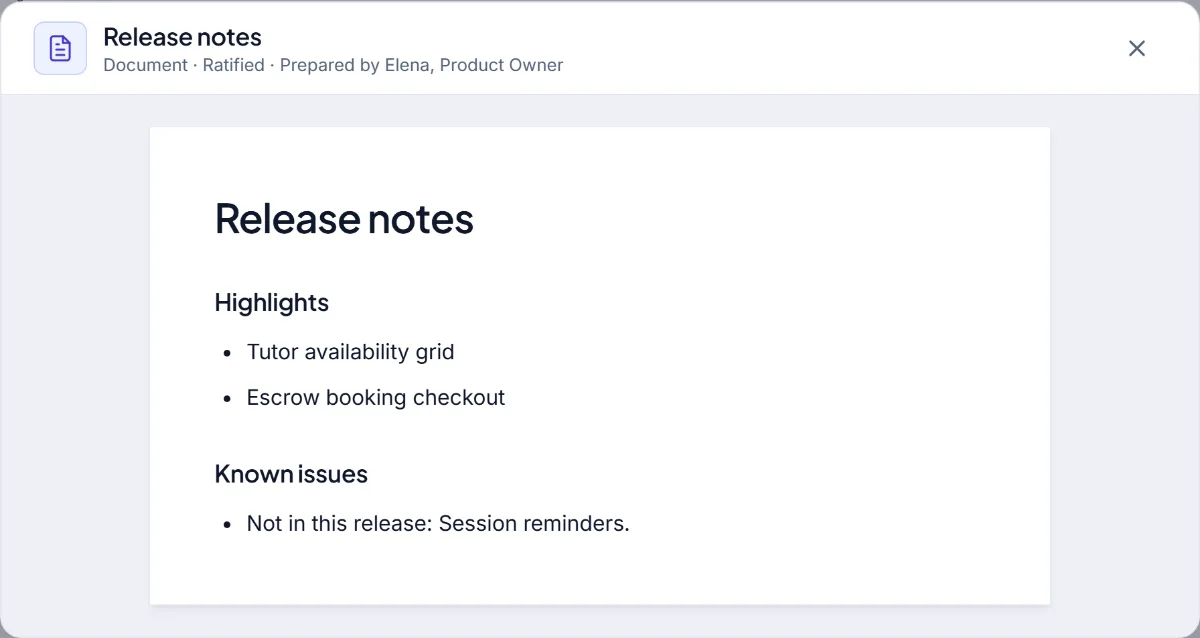
This is the SBOK's Ship Deliverables process, which describes formal acceptance, release notes and the plan for deployment. The release notes name what was delivered and what was not, and they are written from the work that was actually accepted, which is a good reason to be honest at the earlier reviews.
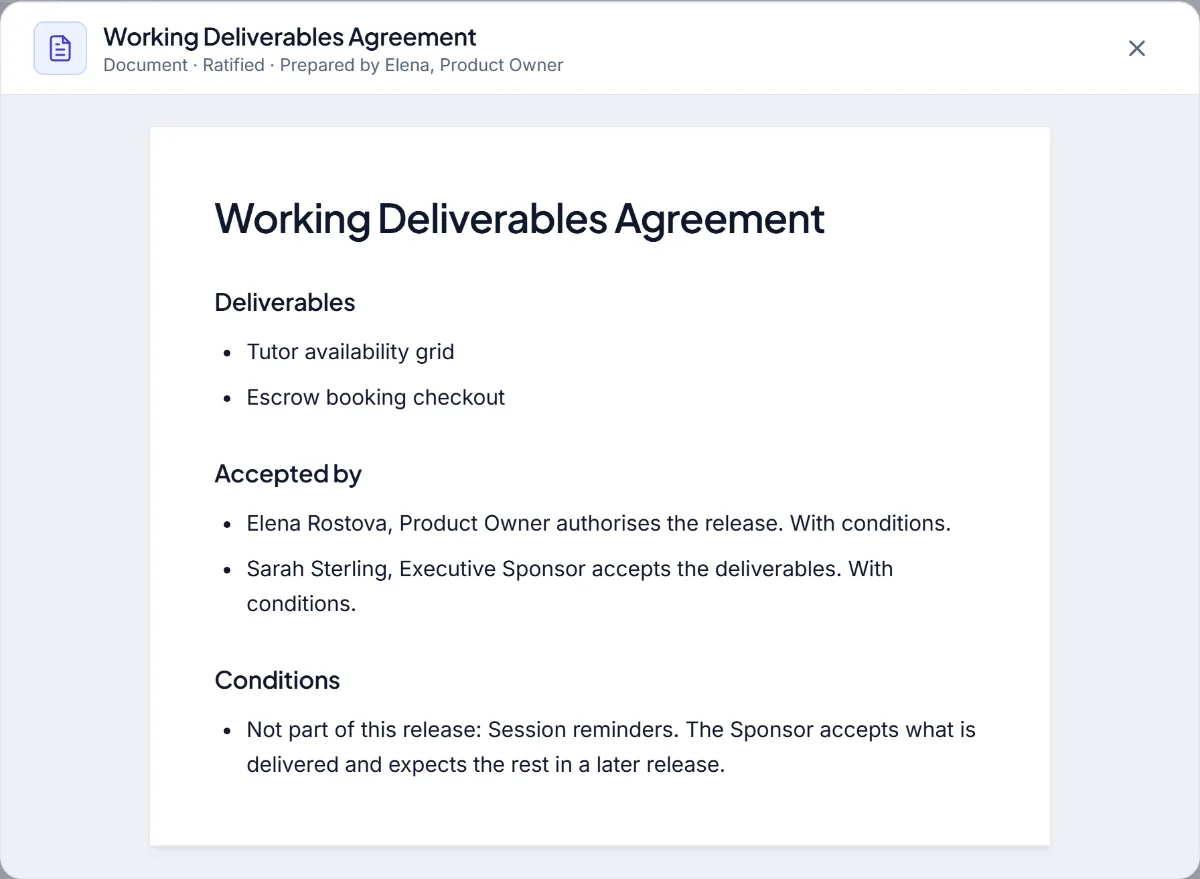
The agreement is the SBOK's formal sign-off for the delivered work. The Scrum Guide does not describe one, because it describes the team's work and not the commercial arrangements around it. If your organisation needs a signature, this is where it belongs.
Step 5.2: retrospect the release
What you see. The release record, the action items, the impediment log and the acceptance register: everything the project produced.
What happens. The whole team looks back on the value delivered, the return on investment and the technical lessons, then closes the project. The sponsor takes part, unlike in the sprint retrospectives.
What you decide. Whether to finalise the project, or to finalise it and schedule a follow-up on the lessons. Finalising produces the scorecard, and it cannot be taken back.
What it produces. The scorecard, the lessons learned and the final action items.
This is the SBOK's Retrospect Release process, a look back across several sprints with the stakeholders in the room. The Scrum Guide has no event for it, and looking back on a whole release explains why teams hold one anyway.
The scorecard
When you finalise the project, Scrumagic produces a scorecard. It is built from the decisions you recorded across the run, and it covers things like budget, the accuracy of the estimates, the business value delivered and how closely the work followed Scrum. Each role also gets a view of how its own part went. You can read it, and you can export it.
It is a scorecard and not a certificate. It is not a grade and not a statement about any exam. Its use is to show you why the run went the way it did, so that the second run is better.
How the roles differ here
At the cutover, the Product Owner is the one who authorises the release, the sponsor accepts the deliverables, and the Scrum Master and the developers are there for it. The project retrospective is led by the Scrum Master and involves everyone, including the sponsor, who stays out of the sprint retrospectives. Each role then sees a scorecard with the same project measures and a view of how its own part went.
What the release teaches
The cutover is the one place in the run where waiting costs nothing and acting cannot be reversed, which is how many real releases feel. Whatever you decide, and however sure you feel, notice what you used to decide it: the acceptance register, the Definition of Done and the charter are all in front of you, and each one is a record of something agreed earlier.
Real releases carry the same weight, which is one reason teams rehearse them and write a rollback plan before they need it.
After the scorecard
The scorecard is the end of the run and the start of the next one. You can export it, read it against the decisions you remember, and decide what to do differently. A second run in a different role is a natural next step, and so is a harder scenario. The scenarios at a glance describes them, and a run as the Product Owner is a good place to see the same project from the decision-maker's chair.
What carries forward
Phase 5 is the one phase you cannot practise twice in the same run, which is why it is worth reading the earlier ones carefully first. Reading the scorecard before a second run is a good way to play it differently: it names the decisions that mattered, so you can make them again, or not. That is the purpose of the simulation.
Phase 5 needs a Pro plan, and the pricing page has the details. Everything in the simulation is fictional.
SBOK® is a registered trademark of its owner. Scrumagic is independent and is not affiliated with the owners of SBOK®.
Nothing opened? This computer may have no email program set up. Write it in Gmail or use the copy button and paste the link into your email.